
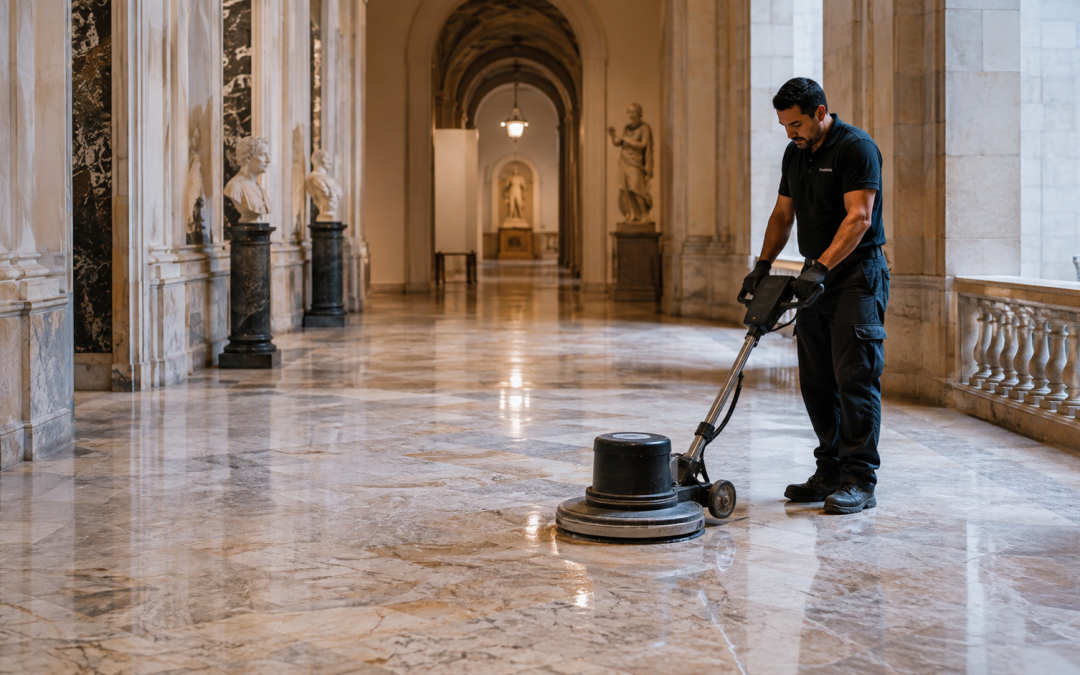
Historic buildings across London often contain original marble, limestone, travertine and other natural stone floors that have survived for generations. These surfaces form an important part of a building’s character, but they require specialist care to remain attractive, safe and structurally sound.
Busy entrances, public walkways, reception areas and galleries can experience thousands of footsteps each week. Without the right maintenance, natural stone may become dull, scratched, stained or uneven. Professional cleaning, restoration and sealing help preserve the floor while avoiding unnecessary replacement.
Why Stone Floors in Historic Buildings Need Specialist Care
Natural stone is durable, but it is not maintenance-free. Marble, limestone and travertine are porous materials that can absorb moisture, dirt and spills if they are not cleaned and protected correctly.
Historic floors can also present challenges that are less common in modern buildings. These may include:
• Uneven tiles or slabs
• Previous repairs using unsuitable materials
• Worn sealants and finishes
• Deeply embedded dirt
• Scratches caused by grit and heavy foot traffic
• Stains that have developed over many years
• Delicate edges, joints or original features
Standard floor cleaning products may not be suitable for natural stone. Acidic or abrasive chemicals can cause etching, discolouration and permanent surface damage.
A professional assessment helps identify the type of stone, its current condition and the safest treatment method.
Managing Heavy Foot Traffic
High footfall is one of the main causes of deterioration in historic stone floors. Entrances, corridors, galleries, reception areas and public rooms often show wear much sooner than quieter sections of a building.
Dirt and grit carried in on footwear can act like sandpaper, gradually scratching the surface. Over time, polished stone may become dull, while individual sections develop uneven wear patterns.
Effective protection often includes:
• Entrance matting to reduce tracked-in dirt
• Regular removal of dust and grit
• Suitable stone-safe cleaning products
• Planned professional maintenance
• Prompt treatment of spills and stains
• Periodic polishing or honing where required
In busy London buildings, preventative maintenance is usually more cost-effective than waiting for the stone to become heavily damaged.
Specialist Cleaning for Marble and Limestone
Marble and limestone require different treatment from standard ceramic tiles or commercial flooring. Both materials are sensitive to acidic cleaners, including products containing vinegar or citrus-based ingredients.
Professional stone cleaning uses products and equipment selected for the specific material. The process may include deep cleaning, controlled agitation, stain treatment and careful extraction of residue.
For properties where marble has become dull, patchy or heavily marked, professional marble cleaning in London can remove embedded contamination and improve the overall finish without damaging the stone.
Limestone floors often benefit from deep cleaning followed by sealing. This helps improve appearance while reducing the risk of future staining.
Polishing, Honing and Restoration
Cleaning alone may not be enough when a historic stone floor has suffered scratches, etching or significant surface wear. In these cases, the floor may require honing, polishing or full restoration.
Honing uses specialist abrasive pads to remove a very fine layer from the surface. This can reduce scratches, uneven patches and light damage while producing a smooth, consistent finish.
Polishing follows the honing stage where a reflective finish is required. The level of shine can be adjusted to suit the building, from a subtle satin finish to a high-gloss appearance.
Where marble has suffered deeper wear, staining or damage, professional marble restoration in London may include diamond grinding, honing, polishing, repairs and sealing.
The aim is not to make every historic floor look brand new. The correct approach should improve its condition while respecting the original appearance and character of the building.
Restoration or Replacement
Replacing a historic stone floor should usually be considered only when restoration is no longer practical. Original stone often has architectural, financial and aesthetic value that modern replacements cannot easily reproduce.
Professional restoration may be suitable where the floor has:
• Lost its original shine
• Developed scratches or etch marks
• Become stained or discoloured
• Suffered uneven surface wear
• Been affected by inappropriate cleaning products
• Developed minor chips or cracks
Replacement may be necessary where stone is structurally unstable, severely cracked or missing in multiple areas. Even then, it may be possible to retain much of the original flooring and replace only the damaged sections.
An experienced stone floor specialist can assess whether cleaning, polishing, repair or replacement offers the best long-term result.
Why Protective Sealing Matters
Natural stone sealing helps reduce the amount of moisture, oils and staining substances absorbed into the floor. It does not make the stone completely stain-proof, but it gives property managers more time to deal with spills before permanent marks develop.
The correct sealant depends on:
• The type of stone
• The level of foot traffic
• Whether the floor is polished or honed
• The age and condition of the surface
• The building’s maintenance routine
• The desired appearance
Some sealers are designed to preserve the natural colour of the stone, while others may enhance its tone and pattern.
Professional stone floor cleaning in London can be followed by a suitable sealing treatment where required. The floor must be thoroughly cleaned and allowed to dry before the sealant is applied.
Planned Maintenance for Historic Buildings
A planned maintenance programme helps protect stone flooring and avoid disruptive restoration work. The frequency of professional treatment depends on the type of stone, the number of visitors and the level of daily cleaning.
A practical maintenance plan may include:
• Daily removal of loose grit and debris
• Regular cleaning with stone-safe products
• Periodic professional deep cleaning
• Inspection of entrances and high-use areas
• Spot treatment of stains
• Polishing or honing when the finish begins to wear
• Resealing when protection starts to weaken
Commercial and public buildings may require more frequent maintenance than residential properties because of constant foot traffic.
The cleaning team should also receive clear guidance on which products can and cannot be used. Many stone floors are damaged gradually through repeated use of unsuitable general-purpose cleaners.
Maintaining Safety and Presentation
Worn or poorly maintained stone floors can affect more than appearance. Uneven sections, loose tiles and damaged edges may create safety risks in busy public areas.
A clean, consistent floor also contributes to the overall presentation of a historic building. Visitors notice entrance halls, reception spaces and public walkways immediately, particularly in hotels, galleries, offices and luxury retail premises.
Professional maintenance helps:
• Preserve the original stone
• Improve first impressions
• Reduce slip and trip risks
• Extend the life of the flooring
• Prevent stains becoming permanent
• Reduce the need for expensive replacement
Choosing a Stone Floor Specialist
Historic flooring should be inspected by someone with experience in marble, limestone, travertine and other natural stone materials.
Before appointing a contractor, ask:
• Have they worked with the specific stone type?
• Will they inspect the floor before recommending treatment?
• Do they use stone-safe products?
• Can they explain the difference between cleaning, polishing and restoration?
• Will they test treatments on a discreet section first?
• Can they recommend a suitable maintenance plan?
A reputable specialist should explain what can realistically be achieved and avoid promising that every mark or stain can be removed completely.
Protecting Historic Stone Floors Across London
Historic stone flooring can remain attractive and functional for many more years when it is cleaned, restored and protected correctly. The right approach depends on the type of stone, the level of wear and the way the building is used.
Floor Care 4 Less provides specialist stone and marble floor care for residential, commercial and historic properties across London. Services include deep cleaning, polishing, restoration, repairs and protective sealing.
Contact Floor Care 4 Less to arrange an assessment and receive professional advice on maintaining the natural stone floors within your property.