
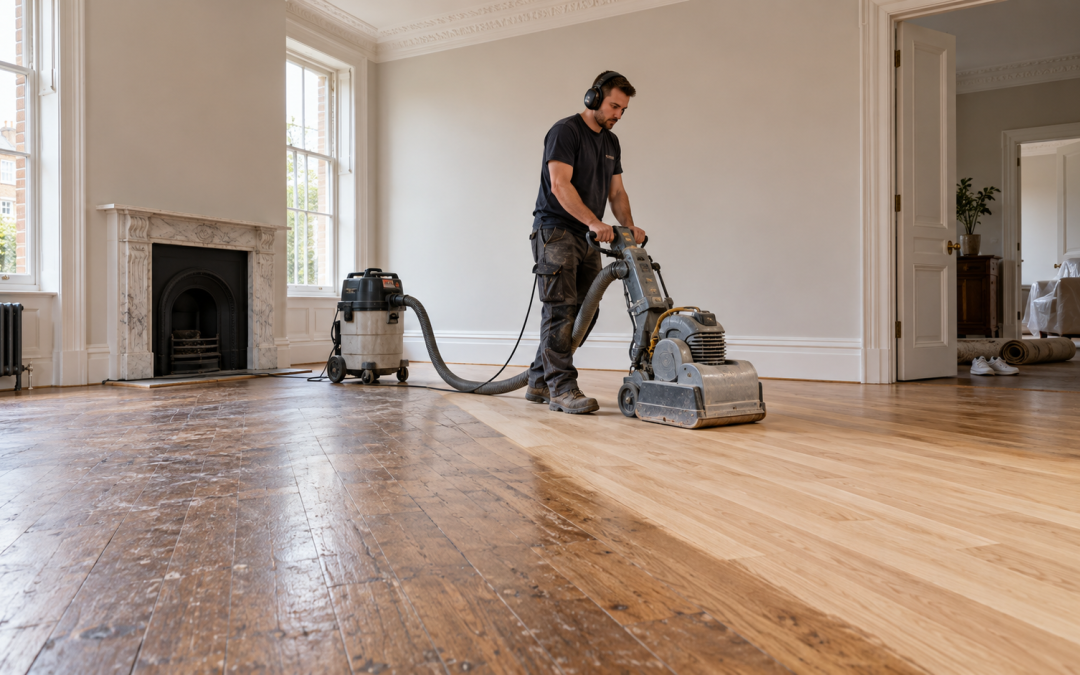
Professional floor sanding can transform scratched, dull and worn wooden floors, but many property owners are understandably concerned about disruption. How long will the work take, when can the room be used again and how soon can furniture be returned?
Most straightforward floor sanding projects take between one and three days. A single room may be completed within one working day, while larger areas, extensive repairs or multiple coats of finish can extend the project. Light foot traffic may be possible the following day, but the exact waiting time depends on whether the floor has been finished with oil, lacquer, stain or another protective product.
Floor Care 4 Less provides professional floor sanding in London for homes, landlords and commercial properties. Every project is assessed individually so that customers receive realistic guidance on the work involved and when the floor can safely be used again.
How Long Does Professional Floor Sanding Take?
The sanding itself may only take several hours in an average-sized room. However, professional floor sanding involves more than passing a sanding machine over the boards.
The floor must be inspected, prepared and sanded through a series of progressively finer grades. Edges and corners also need attention, and loose or damaged boards may require repair. The floor must then be carefully cleaned before the chosen stain, oil or lacquer is applied.
As a general guide, a small or average-sized room with a floor in reasonable condition may take one day to sand and prepare. A larger room, several connected areas or a floor requiring repairs may take two or three days. The drying and curing time of the finish must then be added before the room can return to normal use.
Commercial projects can take longer because they often cover larger areas or require phased working to keep part of the premises accessible.
What Can Make Floor Sanding Take Longer?
The size of the floor is important, but it is not the only factor. Two rooms of a similar size can require very different amounts of work depending on the timber and its condition.
Additional time may be needed if the floor has deep scratches, damaged boards, exposed nails, large gaps or several layers of old coating. Adhesive, paint, bitumen or other residues left by a previous floor covering can also make preparation more complicated.
Period properties can contain original floorboards that need to be handled carefully. Some boards may have become thin, loose or uneven after years of use or previous sanding. Suitable engineered wood flooring can sometimes be sanded, but the thickness of its real-wood wear layer must be checked first.
Where the floor needs more than straightforward sanding, professional hardwood floor restoration in London may include local repairs, board replacement, filling, staining and refinishing.
Can You Walk on the Floor Immediately After Sanding?
You may be able to walk on the bare wood once the sanding and cleaning have been completed, but the floor normally receives a protective finish before the project is handed back.
You should not walk on the floor until the applied oil, lacquer or other finish has dried sufficiently and the flooring contractor confirms that it is safe. Walking on it too soon can leave footprints, dull patches or marks that become trapped in the finish.
Light foot traffic is often possible the following day, but this is only a general guide. Some fast-drying products may be ready sooner, while traditional oils, multiple coats, cooler temperatures or poor ventilation can require longer.
When access is permitted, clean socks are generally safer than outdoor shoes during the early drying period. Pets should also be kept away until the surface can withstand claws, dirt and sudden movement.
What Is the Difference Between Drying and Curing?
A floor can feel dry before the finish has completely cured.
Drying means that the surface is no longer wet or tacky and may be able to accept careful foot traffic. Curing is the longer chemical process through which the finish reaches its intended strength and resistance.
This distinction matters because a newly finished floor can still be vulnerable even when it appears dry. Heavy furniture, rugs, rubber-backed mats and normal household cleaning may need to be avoided for longer.
The product manufacturer’s guidance and the flooring contractor’s instructions should always take priority. Temperature, humidity, ventilation, the number of coats and the amount of product applied can all affect the timescale.
When Can Furniture Be Put Back?
Furniture should not be returned until the finish is sufficiently dry and stable. Depending on the product, this may be between 24 and 72 hours, although some finishes require longer.
Furniture should be lifted into position rather than dragged across the floor. Protective felt pads should be placed under chair legs, tables and other items that could scratch or concentrate pressure on the new finish.
Heavy furniture and items with broad bases may restrict airflow or leave impressions if they are returned too early. Your contractor should provide a specific return time based on the finish used.
If the room contains fitted furniture or items that cannot be removed, this should be discussed before the work begins.
When Can Rugs Be Returned?
Rugs and mats generally need to stay off the floor longer than ordinary furniture because they prevent air from circulating around the finish.
For some systems, rugs should be kept off the floor for at least seven days. Certain oil finishes can take approximately 10 to 14 days to cure fully. Returning rugs too early can affect curing, trap odours or create an uneven colour beneath the covered area.
Rubber-backed mats can be particularly problematic because they may react with a new finish or trap moisture. Always follow the advice provided for the particular product applied to your floor.
How Long Does Each Stage Usually Take?
Every project is different, but a typical floor sanding schedule may look like this:
- Preparation and minor repairs Several hours or longer where damaged boards or gaps need attention.
- Sanding Approximately half a day to a full day for an average room.
- Detailed edge sanding and cleaning Several additional hours.
- Staining Additional time is needed for application and drying if the colour is being changed.
- Oil or lacquer application One or more coats may be needed, with drying time between coats.
- Light foot traffic Often possible the following day, subject to the product used.
- Furniture Commonly returned after 24 to 72 hours when approved by the contractor.
- Rugs and normal use Often delayed for at least seven days and potentially longer while the finish cures.
These timings are approximate and should not replace the instructions supplied for the chosen finishing system.
Do You Need to Leave Your Home During Floor Sanding?
It is not always necessary to leave the property, particularly when only one room is being treated. However, the room being sanded must normally be cleared and kept out of use.
Floor sanding machinery creates noise, and there will still be some fine dust despite the use of modern dust-control equipment. Finishing products can also create an odour and require good ventilation.
Families with young children, pets or anyone sensitive to noise or smells may find it more comfortable to stay elsewhere during the main sanding and finishing stages. Access can also be difficult when hallways, stairs or connecting rooms are being restored.
In a London flat or shared building, it is sensible to consider working hours, communal access, neighbours and how equipment will be brought into the property before choosing a start date.
How Can You Prepare for Floor Sanding?
Removing smaller items before the contractor arrives can help the work begin on time. Furniture, rugs, curtains that touch the floor and fragile objects should normally be taken out of the room.
The floor should be accessible, and any known loose boards, stains or damaged areas should be pointed out during the assessment. Arrangements for parking, stairs, lifts and entry to the property are particularly important in London, where restricted access can affect the schedule.
Doors may also need to be checked because sanding and refinishing can slightly alter the floor level or reveal existing clearance problems.
Does Every Wooden Floor Need Full Sanding?
No. Some wooden floors only require professional cleaning, light abrasion or a maintenance coating. Full sanding is more appropriate when scratches, staining, uneven wear or a failing finish cannot be corrected through routine maintenance.
A professional assessment can determine how much timber needs to be removed and whether the floor is suitable for sanding. This is particularly important for engineered wood flooring and floors that have already been sanded several times.
After restoration, suitable wooden floor maintenance can help protect the finish and delay the need for another full sanding project.
How Can Disruption Be Kept to a Minimum?
The most effective approach is to agree on the schedule before work starts. The contractor should explain which rooms must be cleared, when access will be restricted and how long the chosen finish needs to dry.
Larger homes and commercial premises may be completed in stages. This can preserve access to essential areas, although phased work may extend the overall project.
Choosing an appropriate finish is also important. A faster-drying system may be helpful for a shop, office or rental property with limited downtime, while another product may be preferred for its appearance or future maintenance.
Arrange Floor Sanding in London
Most floor sanding projects take between one and three days, followed by a drying and curing period determined by the chosen finish. Light foot traffic may be possible the following day, but furniture, rugs and normal use usually need to wait longer.
Floor Care 4 Less can assess the flooring, explain the likely schedule and recommend an appropriate finish for the property. Contact the team to request a quotation for floor sanding in London and receive advice based on the size, condition and use of your wooden floor.