
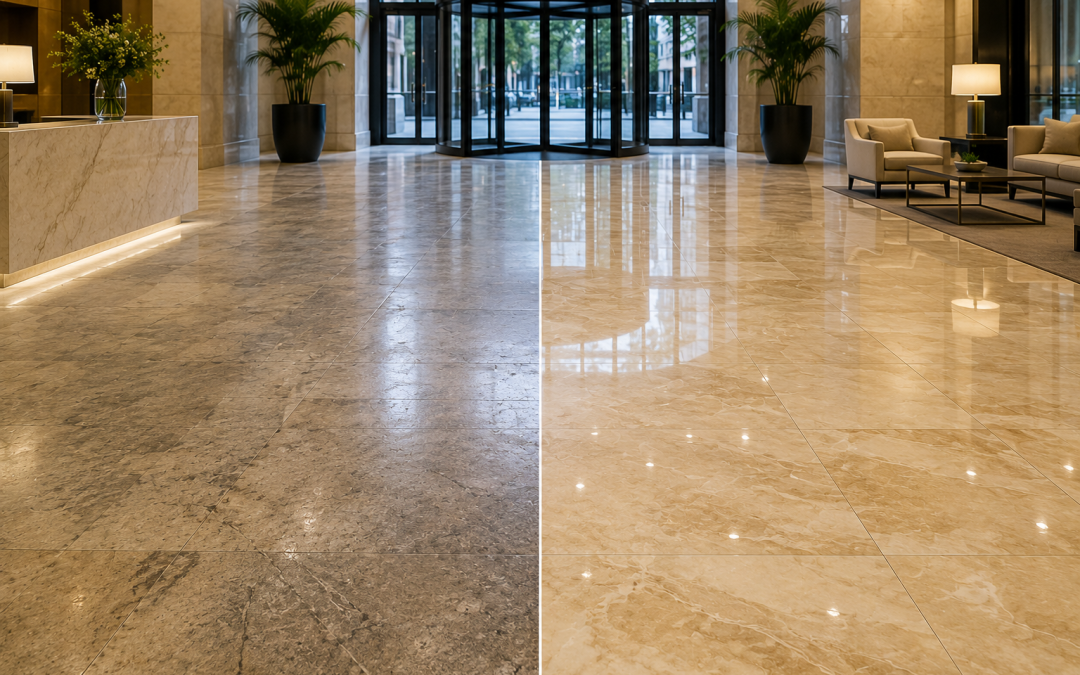
Natural stone flooring can remain attractive for decades, but regular use, heavy foot traffic, spills and unsuitable cleaning products can gradually affect its appearance. Scratches, dull patches, staining, etching and uneven areas can all leave a once-impressive floor looking worn and tired.
FloorCare4Less provides professional stone floor restoration in London for residential and commercial properties. We restore marble, limestone, travertine, terrazzo and other natural stone floors using specialist equipment and carefully selected treatments suited to the condition of the surface.
Our restoration service is designed for floors that need more than routine cleaning. Depending on the damage and the finish required, the work may involve grinding, honing, polishing, stain treatment, repairs and sealing. Every floor is inspected before treatment so that we can recommend the most appropriate restoration process.
Professional Stone Floor Restoration in London
Stone floor restoration is the process of repairing surface damage, removing wear and restoring the natural appearance of the floor. Unlike standard cleaning, restoration works directly on the stone itself.
A deep clean may remove dirt and residue, but it will not usually correct scratches, etching, uneven finishes or physical damage. Restoration can address these problems by carefully refining the surface and rebuilding the desired finish.
Our stone floor restoration service can help with:
- Dull or uneven flooring
- Scratches and surface abrasion
- Etching caused by acidic spills
- Stains and discolouration
- Worn high-traffic areas
- Cracks, chips and damaged joints
- Uneven lippage between tiles
- Loss of polish or reflectivity
- Old coatings and cleaning residue
The exact process will depend on the type of stone, its age, the severity of the damage and whether a matt, satin or polished finish is required.
Natural Stone Floors We Restore
Different types of natural stone respond differently to cleaning, polishing and restoration. A treatment that works well on one material may be unsuitable for another, which is why the floor must be correctly identified before work begins.
Marble Floor Restoration
Marble is known for its distinctive veining and high-end appearance, but it is also vulnerable to scratching and etching. Acidic substances such as wine, fruit juice, vinegar and unsuitable cleaning products can leave pale or dull marks on the surface.
Marble restoration may involve grinding, honing and polishing to remove damage and restore an even finish. Sealing can then help reduce the risk of future staining.
Limestone Floor Restoration
Limestone is a popular choice for kitchens, hallways and commercial spaces, but its porous surface can absorb dirt and spills. Over time, limestone may become dull, stained or uneven.
Restoration can remove ingrained contamination, reduce scratches and renew the surface without losing the natural character of the stone.
Travertine Floor Restoration
Travertine has naturally occurring pits and voids which may collect dirt or become damaged. Old filler can also crack, loosen or fall away.
Our travertine restoration service can include deep cleaning, repairs, refilling damaged areas, honing, polishing and sealing where appropriate.
Terrazzo Floor Restoration
Terrazzo is durable, but years of use can cause scratching, staining and loss of shine. Specialist grinding and polishing can expose a clean, even surface and restore its appearance.
We can assess both traditional and modern terrazzo floors and recommend a suitable restoration method.
Other Natural Stone Floors
We also restore other suitable natural stone surfaces, including slate, sandstone and granite. The treatment is adapted to the finish, condition and characteristics of each material.
Common Problems with Stone Flooring
Natural stone is hard-wearing, but it is not maintenance-free. Several common problems may develop over time.
Scratches and Surface Wear
Fine dirt and grit can act like sandpaper when walked across the floor. In busy entrances, corridors, kitchens and commercial buildings, repeated foot traffic can gradually scratch and dull the surface.
Light scratches may be reduced through honing and polishing. Deeper damage may require grinding before the finish can be restored.
Etching and Dull Patches
Etching is caused by a chemical reaction between acidic substances and calcium-based stone such as marble, limestone and travertine. It often appears as a pale, rough or dull patch.
Because etching affects the surface of the stone, standard cleaning will not remove it. The damaged area normally needs to be honed or polished.
Staining and Discolouration
Natural stone is porous and can absorb liquids if it is unsealed or the existing sealer has worn away. Oil, food, drinks, cleaning chemicals and moisture can all lead to staining.
The success of stain treatment depends on the type of contamination, how deeply it has penetrated and how long it has been present. We assess stained areas before deciding on the most suitable treatment.
Uneven or Patchy Finishes
Stone floors often wear unevenly. Main walkways may become dull while less-used areas retain their original finish. Previous repairs, coatings or inconsistent cleaning can also leave the floor looking patchy.
Restoration helps create a more consistent appearance across the full area.
Cracks, Chips and Damaged Joints
Dropped objects, movement within the floor and general wear can cause cracks or chips. Travertine may also develop damaged filler or exposed holes.
Minor repairs can often be completed as part of the wider restoration process, although results will depend on the location and extent of the damage.
Our Stone Floor Restoration Process
Every project begins with a detailed inspection. This allows us to identify the stone, assess the damage and determine which treatments are required.
Floor Assessment
We inspect the flooring for scratches, stains, etching, cracks, loose areas and previous treatments. We also discuss the finish you want to achieve and how the space is used.
A busy hotel reception may require a different solution from a stone floor in a private home, even if the material is the same.
Preparation and Deep Cleaning
Loose dirt and surface contamination are removed before restoration begins. In some cases, a deeper clean is required to remove old cleaning residue, coatings or ingrained dirt.
This stage provides a clearer view of the floor and helps ensure that the subsequent treatments work evenly.
Grinding
Grinding is used where the stone has deeper scratches, uneven tiles, severe wear or old surface damage. Specialist diamond abrasives carefully remove a small amount of the stone to create a flatter and more consistent surface.
Grinding is not required on every floor. It is only recommended when lighter treatments will not achieve the necessary result.
Honing
Honing uses progressively finer abrasives to smooth the surface and reduce scratching, etching and wear. It can be used to create a matt or satin finish or to prepare the stone for polishing.
A honed finish is often practical for busy areas because it offers a smooth, refined appearance without a high level of reflectivity.
Polishing
Polishing refines the surface further to restore shine and enhance the natural colour and pattern of the stone.
The level of polish can be adjusted according to the material and the preferred finish. Some floors suit a soft satin appearance, while others benefit from a highly reflective finish.
Repairs and Filling
Where appropriate, minor cracks, chips, holes and damaged joints may be repaired as part of the restoration.
Travertine floors often require damaged holes or filler to be renewed before honing and finishing.
Stone Floor Sealing
Once the restoration is complete, an appropriate impregnating sealer may be applied. Sealing helps reduce the absorption of spills and makes routine maintenance easier.
A sealer does not make stone completely stain-proof, but it provides an additional level of protection and can help extend the life of the restored finish.
Commercial Stone Floor Restoration London
Stone flooring is widely used in commercial buildings because it creates a durable and professional appearance. However, high foot traffic can quickly expose wear in entrances, corridors, receptions and communal areas.
We provide commercial stone floor restoration in London for:
- Offices and corporate buildings
- Hotels and serviced apartments
- Retail shops and showrooms
- Restaurants and hospitality venues
- Apartment blocks and communal areas
- Public buildings and galleries
- Property management companies
- Schools and other commercial premises
Commercial work can be planned around the needs of the building to help minimise disruption. Depending on the project, this may involve working in stages, treating specific high-traffic areas or coordinating access outside the busiest periods.
Restoration can often be more cost-effective than replacing a worn natural stone floor, particularly where the underlying material remains structurally sound.
Residential Stone Floor Restoration
Natural stone is also commonly found in hallways, kitchens, bathrooms, living areas and conservatories throughout London homes.
Residential stone floors may become dull through everyday use, spills, furniture movement and repeated cleaning with unsuitable products. Older floors may also have accumulated several layers of residue or coatings.
Our residential restoration service is tailored to the condition of the floor and the character of the property. We take care around surrounding finishes and explain how the restored surface should be maintained after the work is completed.
Stone Floor Restoration Across London
FloorCare4Less provides stone floor restoration throughout Central London and the wider Greater London area.
We work in locations including Westminster, Mayfair, Soho, Covent Garden, Holborn, Kensington, Chelsea, Knightsbridge, Canary Wharf, Camden, Islington, Fulham, Hammersmith, Croydon and surrounding areas.
London properties can present a wide range of flooring challenges. Period buildings may contain older stone requiring a cautious approach, while modern hotels, offices and apartment developments may feature large areas where consistency of finish is especially important.
Whether the floor is in a private home, office reception, hotel lobby, shop, restaurant or communal entrance, we tailor the restoration process to the building and the condition of the stone.
Stone Floor Restoration or Stone Floor Cleaning
Stone floor cleaning and stone floor restoration are related services, but they are not the same.
Professional stone floor cleaning in London is normally suitable when the floor is dirty, stained or affected by cleaning residue but the surface remains in reasonable condition.
Restoration is required when the stone itself has become scratched, etched, worn or damaged. It may involve mechanical treatments such as honing, polishing or grinding.
We can assess the floor and explain whether cleaning alone is likely to achieve the desired result or whether a more extensive restoration is required.
Maintaining a Restored Stone Floor
Correct maintenance can help preserve the appearance of a restored floor.
Loose grit should be removed regularly because it can scratch the surface. Spills should be cleaned promptly, particularly acidic liquids on marble, limestone and travertine.
General-purpose acidic or abrasive cleaning products should be avoided. A pH-neutral cleaner designed for natural stone is normally more suitable.
Entrance matting can help reduce the amount of dirt and moisture brought into busy commercial or residential areas. In larger properties, a planned maintenance programme can prevent the floor from deteriorating to the point where major restoration is needed again.
Why Choose FloorCare4Less
FloorCare4Less has more than 25 years of experience in professional floor cleaning, maintenance and restoration.
We provide:
- Careful inspection before treatment
- Specialist equipment and diamond abrasives
- Treatments suited to the individual stone
- Residential and commercial restoration
- Cleaning, honing, polishing and sealing
- Repairs where appropriate
- Coverage across Central and Greater London
- Clear advice on ongoing maintenance
We do not use a standard treatment for every floor. The stone, finish, age, condition and level of use all influence the restoration process.
Frequently Asked Questions
What is stone floor restoration?
Stone floor restoration is the process of improving worn or damaged natural stone. It may include deep cleaning, grinding, honing, polishing, repairs and sealing.
Can scratches be removed from a stone floor?
Many light and moderate scratches can be significantly reduced through honing and polishing. Deeper scratches may require grinding.
Can you restore dull stone flooring?
Yes. Dullness caused by surface wear, residue or fine scratching can often be corrected through cleaning, honing and polishing.
Do you restore commercial stone floors in London?
Yes. We restore stone flooring in offices, hotels, shops, restaurants, apartment developments and other commercial properties throughout London.
Which types of stone can be restored?
We work with marble, limestone, travertine, terrazzo and other suitable natural stone surfaces.
Is restoration cheaper than replacing the floor?
In many cases, yes. If the stone is structurally sound, restoration can renew its appearance without the cost and disruption of full replacement.
Does stone need sealing after restoration?
Sealing is often recommended because it helps reduce the absorption of spills and makes routine maintenance easier. The appropriate sealer depends on the type of stone and its location.
How long does stone floor restoration take?
The timescale depends on the size of the area, the condition of the floor and the treatments required. A small residential floor may take considerably less time than a large commercial restoration project.
Can etched marble or limestone be restored?
Yes. Etching can often be reduced or removed through honing and polishing because the damage affects the surface of the stone.
Do you work throughout Central London?
Yes. We provide residential and commercial stone floor restoration throughout Central London and the wider Greater London area.
Request a Quote for Stone Floor Restoration London
A worn stone floor does not always need to be replaced. Professional restoration can remove years of wear, improve the finish and reveal the natural character of the stone.
Contact FloorCare4Less to arrange an assessment and request a quotation for stone floor restoration in London. We can inspect the condition of your floor, explain the available options and recommend the most suitable treatment for your home or commercial property.